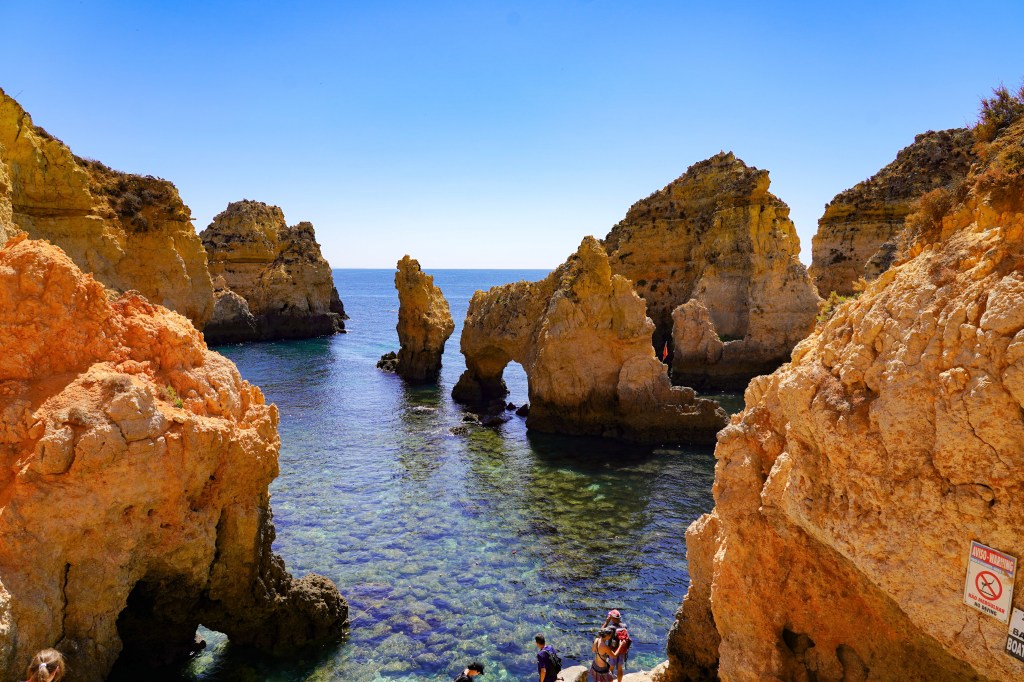
A couple of years ago there was a meme circulating that read something like, “Next time you complain about traffic, remember that you ARE traffic.” I felt that way in the Algarve, one locust among a horde of locusts overwhelming a place to scrub it of its beauty.
The Algarve IS undeniably beautiful. And the weather is pristine. The Algarve refers to the entire southern coastline of Portugal. Its rugged outcrops, cliffs, and caves are formed by limestone erosion. While a quarter mile inland temperatures were in the mid-90s, once you got next to the water things felt much more temperate from the sea breeze (and one night I even wished I had my jacket with me).
The outcroppings off Ponta da Piedras, a small peninsula near the southwest tip of Portugal, resembles the Twelve Apostles off the south coast of Australia—limestone towers—but the differences here are the turquoise water, the warm weather, the calm waters, the boats circling the towers.

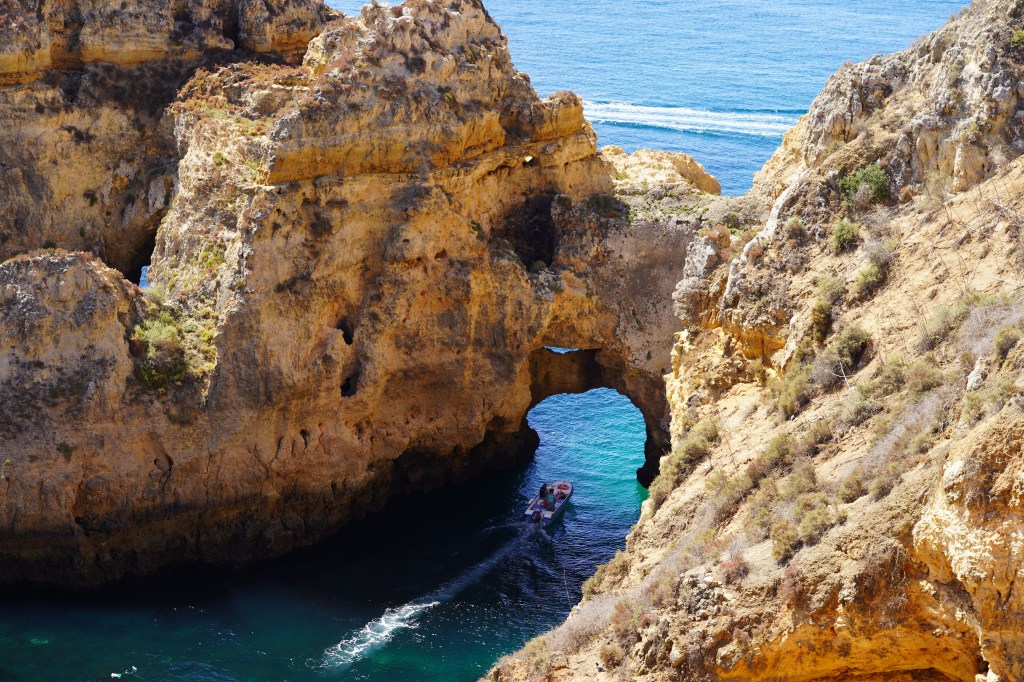
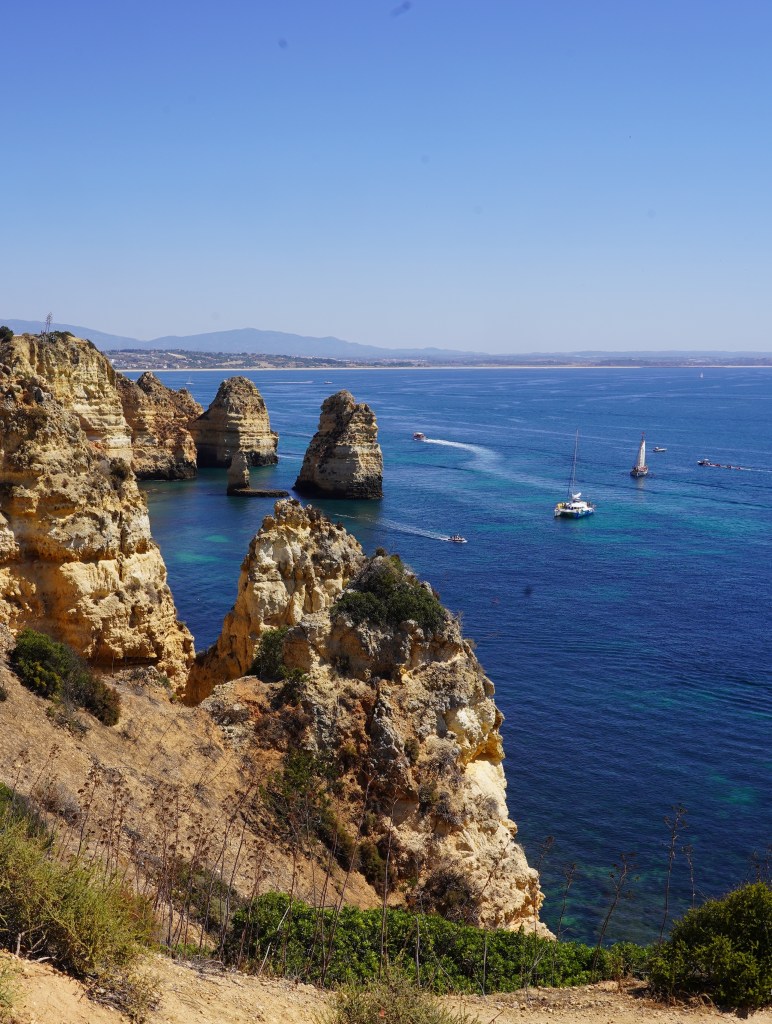
The caves of Benagil are a particular highlight. To reach Benagil cave and its surroundings, you have to kayak in, or ride a speedboat. I did the latter—trying to sea kayak solo in those choppy, crowded waters might have killed me. (Trying to swim there, of course, would have killed me, as it does to several people every year.) You can rent a spot on a speedboat on the beach, which is a difficult-to-access cove at the bottom of a steep hill. You had to board the boat in the shallow surf in front of the endless stacks of sea kayaks available for couples to rent.
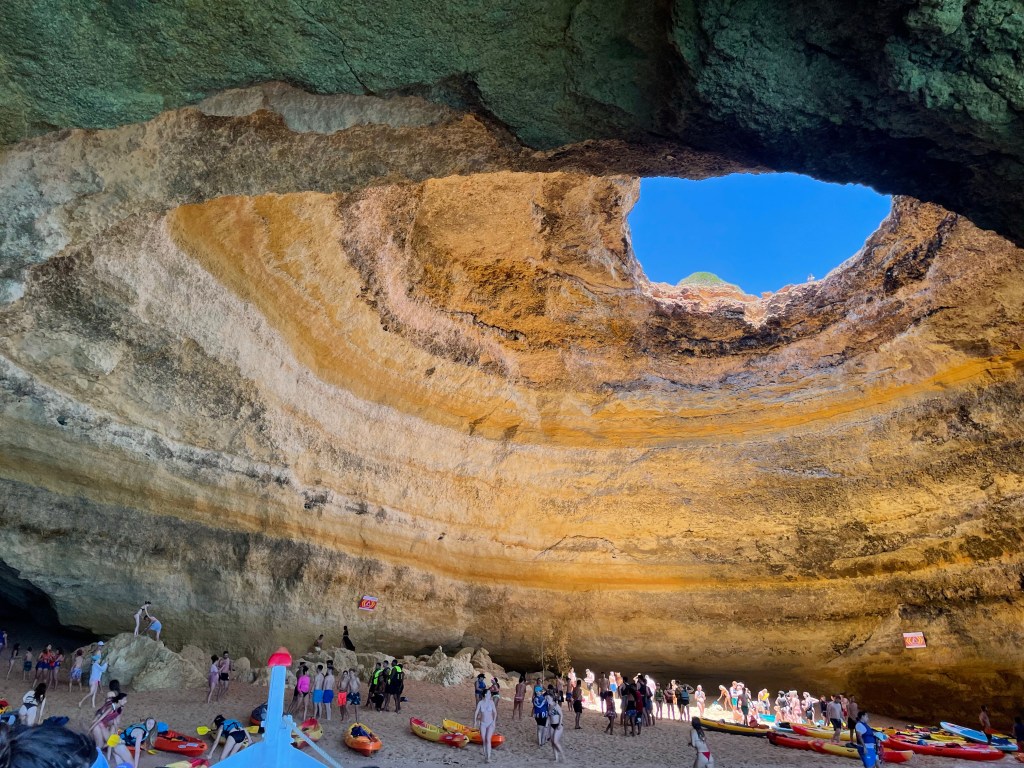
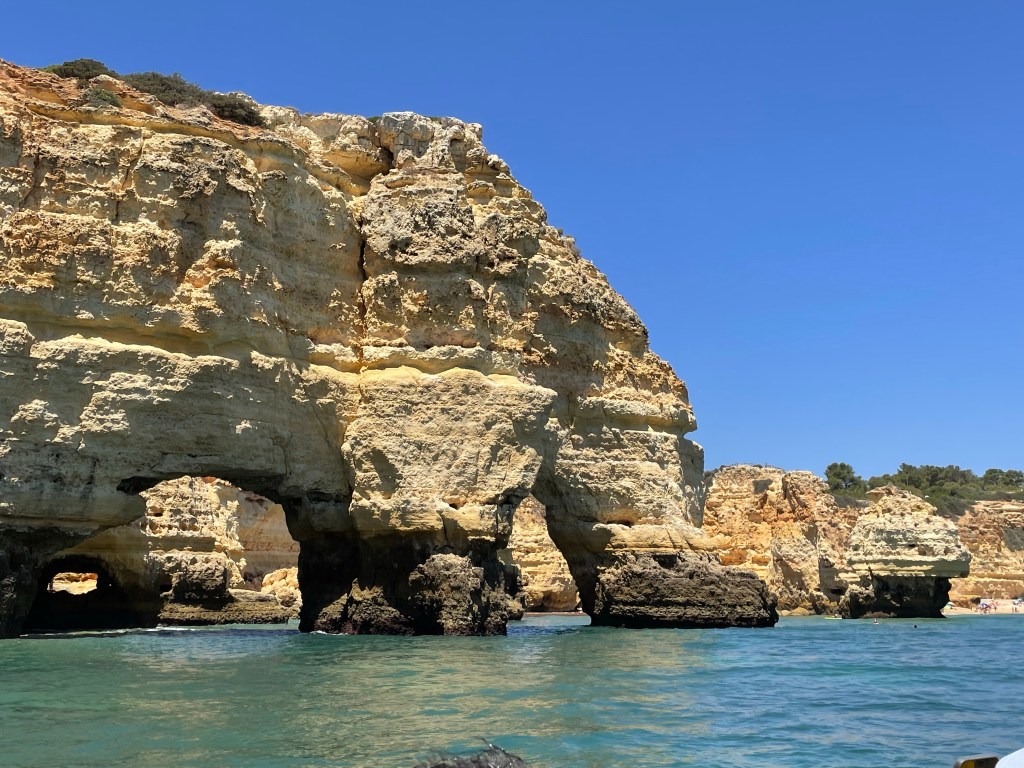
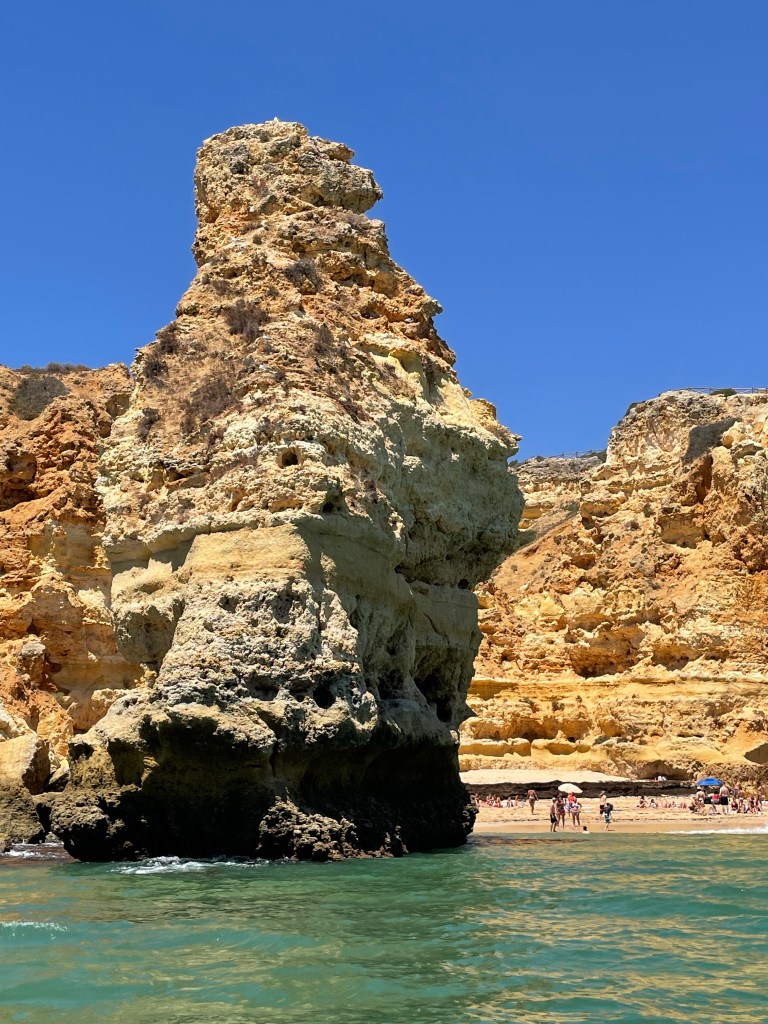
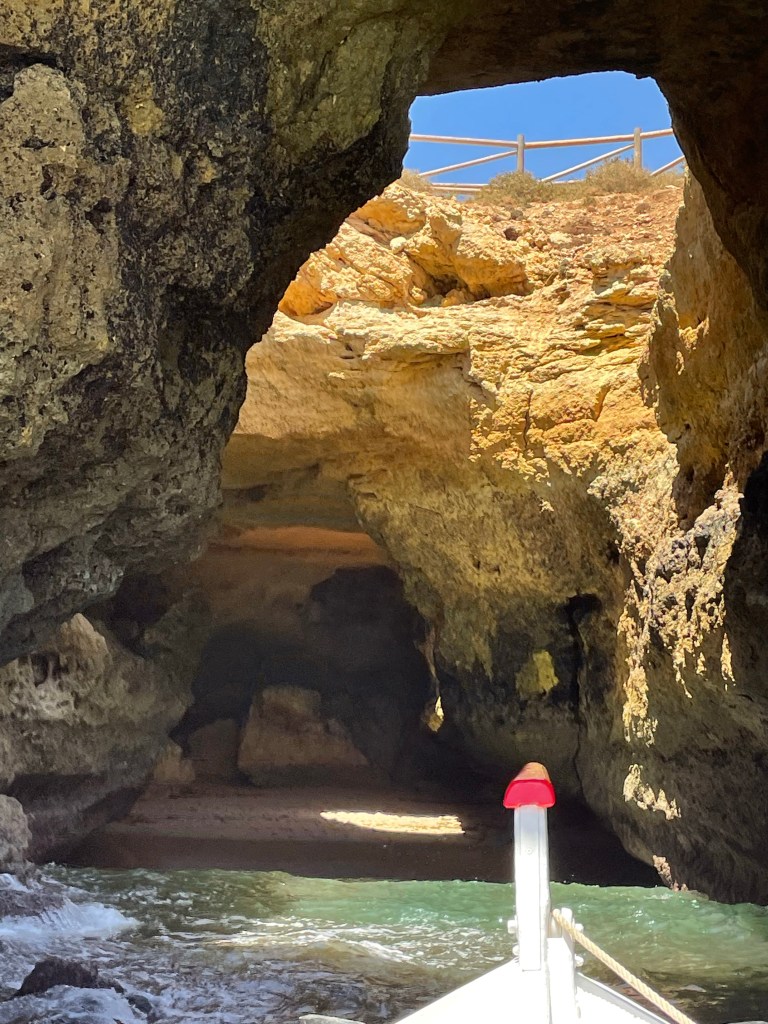
And it’s this beauty that of course leads to overtourism. The beach at Benagil was packed with European sunbathers assuredly trying to escape the heat of Britain, France, and Spain. The sea around the Benagil cave was chockablock with kayakers with boats like mine narrowly missing capsizing the smaller vessels. Another beach we saw on the boat trip, the Praia da Marinha with its elephant and gorilla, was almost completely inaccessible by land because police had closed the roads due to too many people. Somehow my Apple Maps GPS, possessed by the same demonic spirit of taking me up narrow, winding borderline impassable roads that I experienced from a Garmin GPS while driving in Ireland a decade ago, got me around some of the roadblocks, but only got me to within a mile of the beach trailhead. And in the heat of a 97 degree day, I wasn’t about to make that walk to see something from above that I’d already seen from the water.
Even more crowded was Lagos, one of the main towns in the region. Lagos is a small town whose historic center is solely a tourist center, much like the center of Mykonos. Unlike Mykonos, however, the shops and restaurants here are noticeably lower quality. The food is ordinary. The shops don’t sell compelling art but mostly trinkets. I ate one meal here at the only place I could find a reservation—a burger joint of all things. At least this place embraced the kitsch and went full on madness, even serving a sangria made with “green wine,” the vinho verde produced in the more lush regions in northern Portugal on the border with Spanish Galicia.
And that’s how I experienced the area, always having trouble getting into restaurants, having a difficult time finding decent food. Those were the loneliest times this week, wandering around oversaturated tourist trap towns with nothing in common with the other tourists and with nowhere meaningful to go while waiting for a late dinner reservation.
Ah loneliness. Have I told you about how lonely the last two years were, living alone, working from home, unable to travel, and for the first 15 months of the pandemic, stuck at home unable to see friends except in limited circumstances? How everything good in my life—travel, eating out, and most especially a sense of community—all but vanished? How it felt like I was reliving the other darkest times of my life, both of which were associated with severe loneliness: being friendless in my middle school years, and working horrifically long hours treating children with cancer without a well-developed social network to go home to in my first year in Houston? Do you know what the loneliness of having no friends is like, or of burnout is like, or of realizing you’re not like everyone else because you’re “the nerd” or worse “the queer?” Do you know what the loneliness of being 43 and never having been in a long term relationship is like, how that makes you think you’ll be alone forever? All of this while actually being an extrovert, meaning that I get energy more from being around people than being by myself? I don’t mind being alone on a trip such as this when I’m being awed by nature and culture on a long journey such as this, but when I feel a lonely moment in a crowd of people, sometimes I feel the loneliness of decades.
But there is balm too. A couple weeks ago when I was in Hawaii, the thought “the season of ruminating on the past is over; now is the time for new experiences” came to mind. And so on one day, after wandering around the empty, all-white, searing hot, creepy village of Tavira, I drove the to the Praia da Falesia.
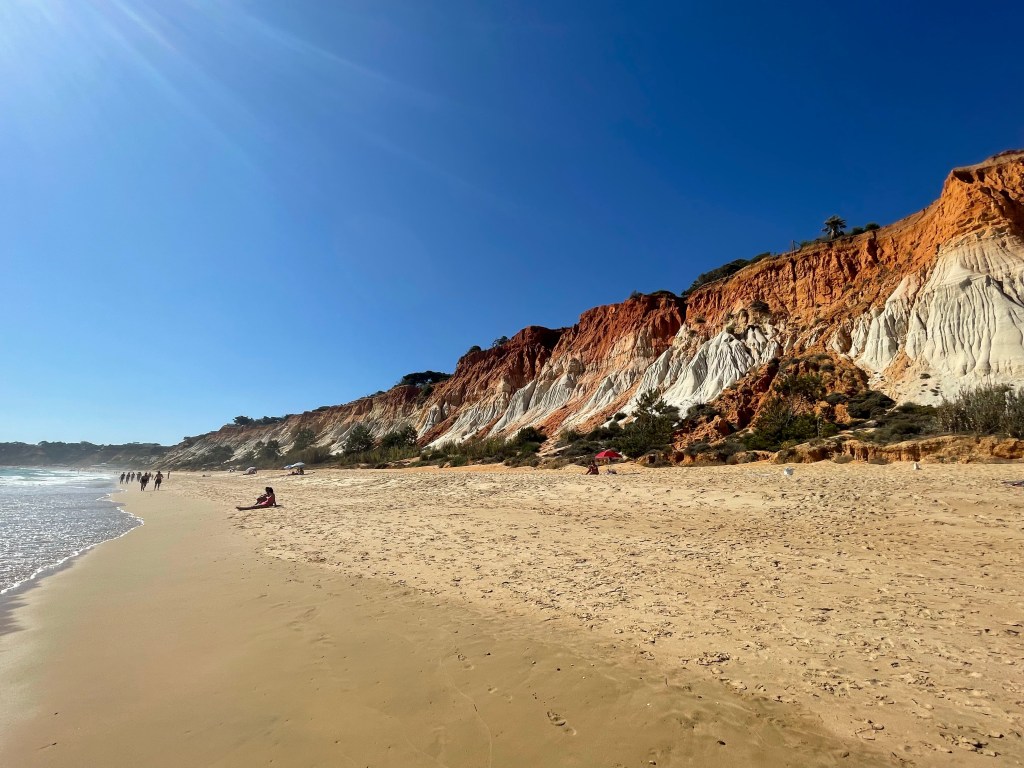
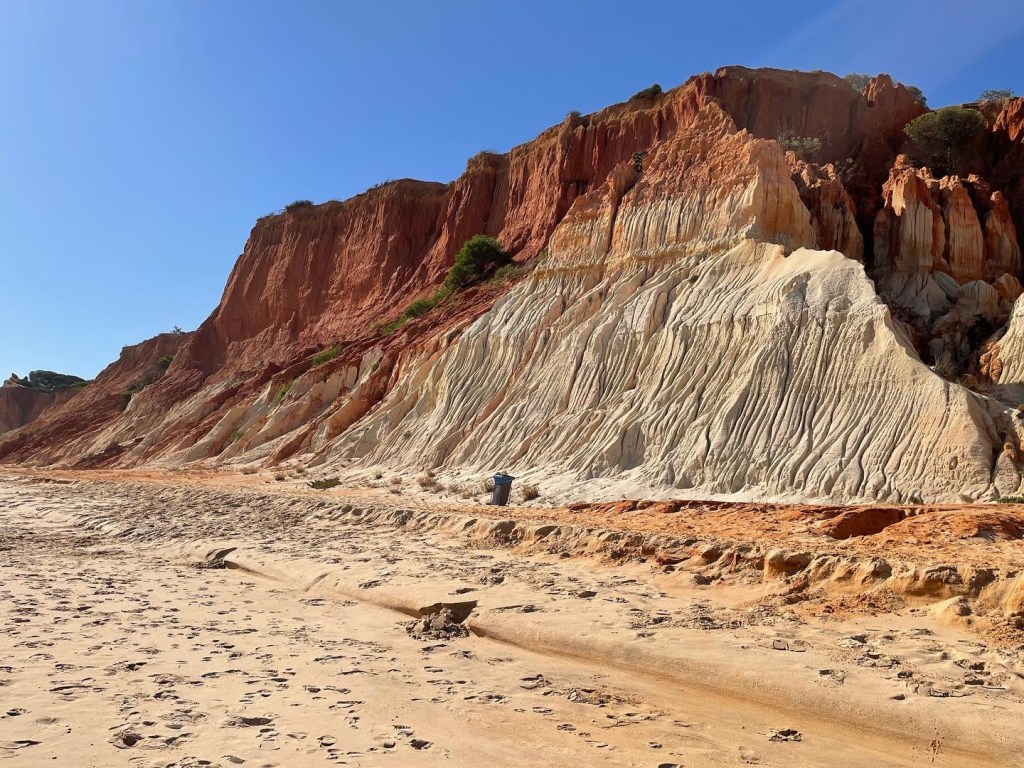
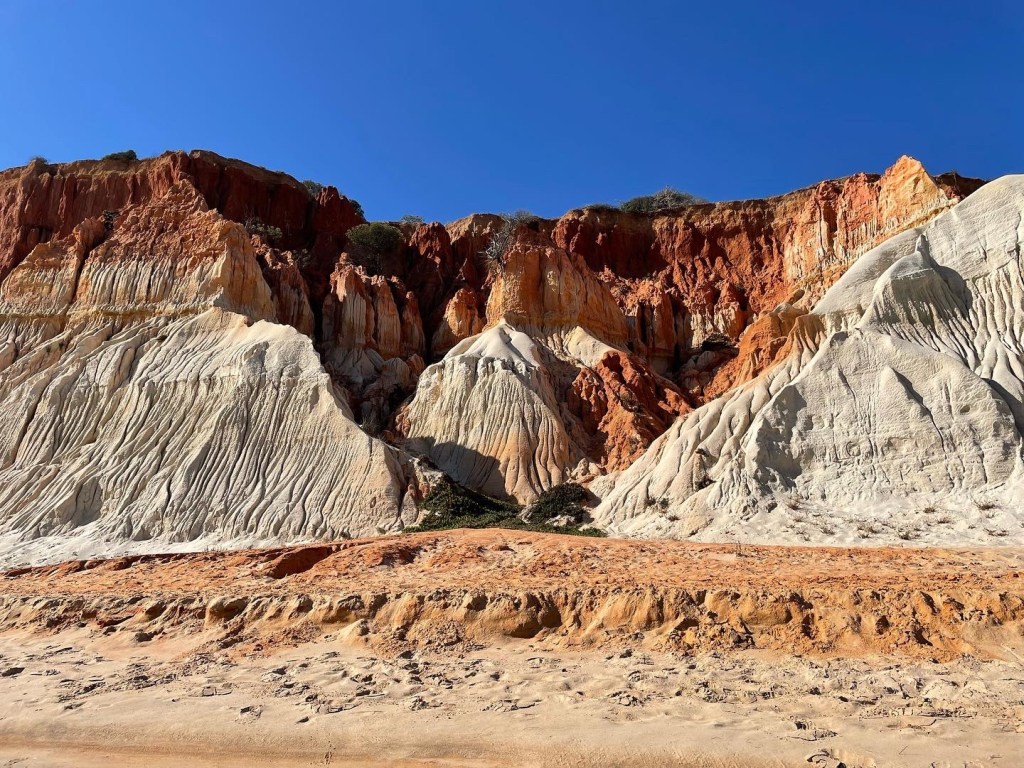
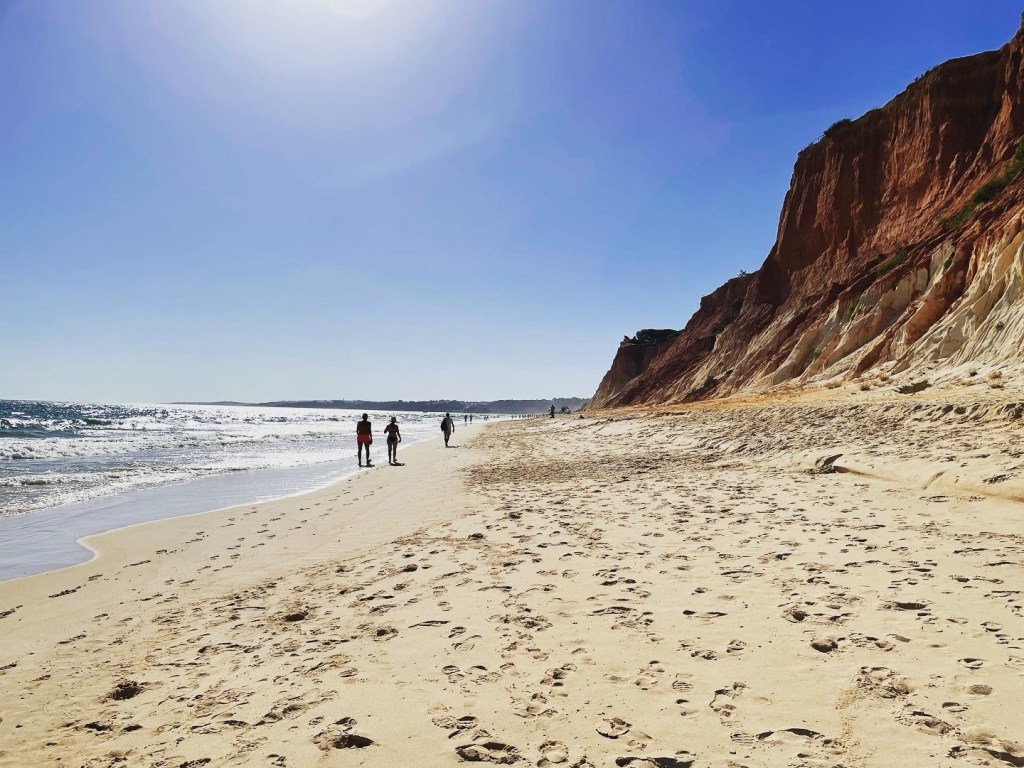
Praia da Falesia is a beach backed by cliffs. It is crowded with beach goers near the steps at its entrances, but it is so long that eventually the crowds thin out and you are able to have more than enough space to yourself. I don’t like sitting on the beach when I’m by myself—I get bored quickly—but I took a walk in the surf for a few miles. The breeze took away the heat of the day. And the negative thought loops, the ruminations on loneliness, I’ve been stuck in during the last 2 years seemed to wash away in the gentle Atlantic surf.
 Steve Simko