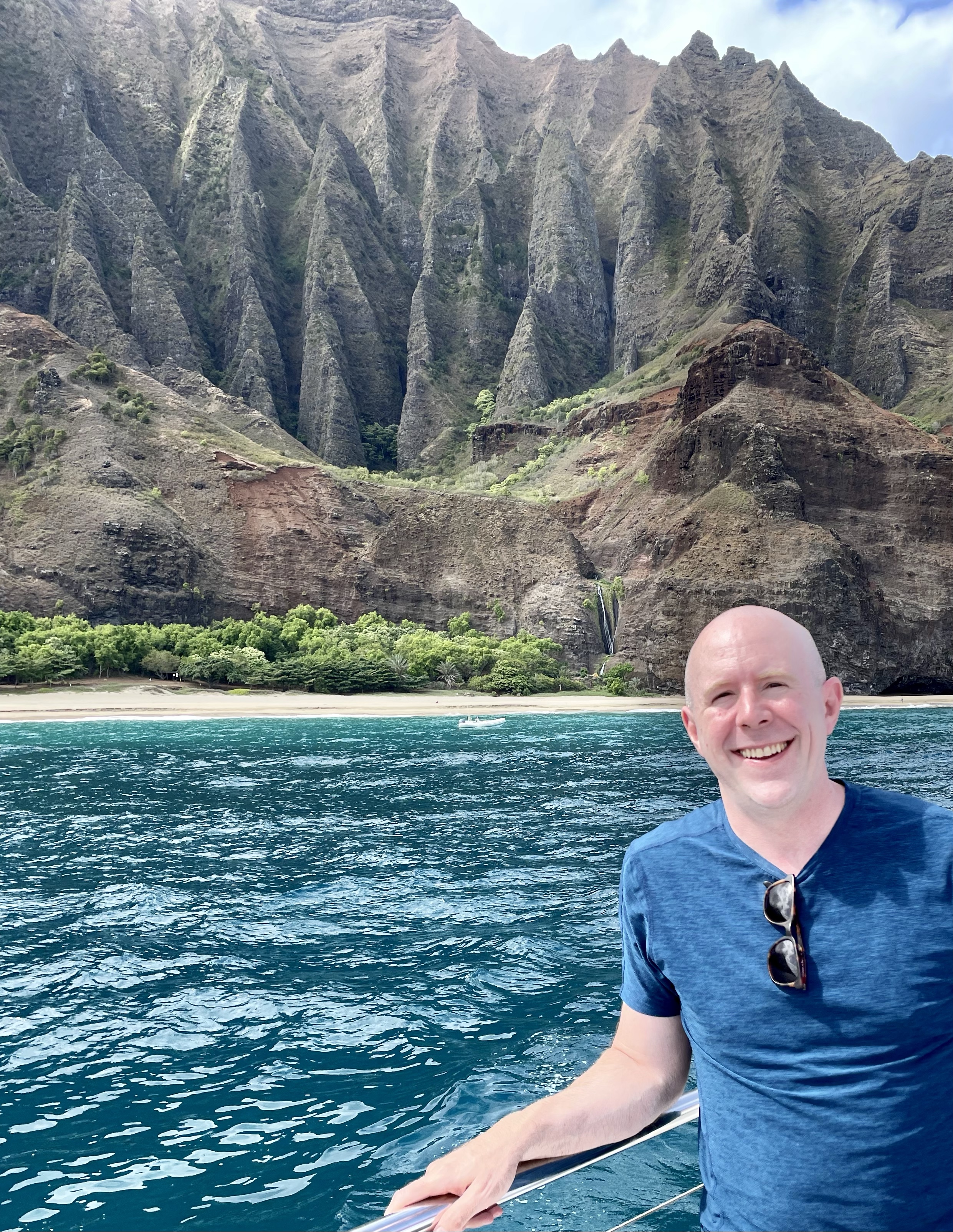
Yesterday I sailed along the Napali Coast, the most spectacular natural wonder of Kauai. No words.


OK some words, but it’s a tangent. While on the boat I met a rising first year med student from SF and his girlfriend. At the end of the trip, he asked me if I had any advice for a new med student. Oh did I…


1) When picking a specialty, do what brings you deep satisfaction. Don’t do something just because you’re good at it, or just because your colleagues are pushing you into it. You have to think for the long haul here.

2) Don’t go through med school or your later career with blinders on. As physicians, we are driven to provide high quality care to patients. But the culture of medicine is beset with workaholism and monomania, and judges success on its own terms (i.e. lines you can put on a CV. We’re too pretentious even to call it a resume). How on earth are you supposed to impact the lives of the patients you’re supposed to be healing if you can’t relate to them or if you’re not bringing a fully self-actualized version of yourself to the table? Cultivate relationships and interests outside of your professional life and you’ll have a much richer life—and be better able to connect with your patients. “Hard work” can be part of an ethos of quality, but it is not (as many physicians forget) a virtue or an end in itself.


3) Think about how you’re going to play a part in reforming healthcare delivery, even in the early stages of your career. Health care in the US is delivered in an exorbitantly expensive way. Twenty percent of our GDP is spent on health care!!! Compare that with other developed nations who have longer life expectancy for lower cost. If you’re not part of solving problems related to this, big or small, you’re perpetuating an unsustainable, parasitic relationship between our society and our health care system. I regret not focusing on this sooner.

4) Know that you are VALUABLE. This was the best piece of advice I received during my training years, and it came not from a senior physician but an older, wiser med school classmate who had more life experience than me. If you’ve fostered an ethos of quality during your training, then this is absolutely true. This mantra for me has had twofold benefit—it has been a great motivator to action, and it has helped me to be my own advocate when necessary. It’s a bulwark against being belittled or being made to feel like an impostor. To be clear, this advice wasn’t meant in an economic sense, but in certain circumstances even in medicine it can apply in that sense as well. There’s a lot more I have to say on this topic…some other time.

5) Don’t be a hero. I’ve given this advice to new pediatric oncology trainees but it applies to all medical specialties. This statement is, I think, my own take on the serenity prayer as it relates to a medical career. You can’t solve all the world’s problems. You can’t solve all your patient’s problems. But you can make a difference by focusing on what you’re trained to do and asking for help from others when the problems you encounter are beyond your scope or ability. It will save you time and energy, and allow you to move on to the next patient who also needs your care, and frees you up to take care of yourself too.

 Steve Simko